Saath Catalogue·Occasion Wiki

Vivaha

View for my community — self-declare (no bond needed)

Pick your family surname + native district; we derive region options and you assert your community. Highlights your variant without forking the canonical URL.

Current: All communities (no filter)
Published 2026-09-04 · region: pan-Hindu · Saath Wikilifecycle

Calendar timing

Adulthood

Stories & history

The wedding the rite still followspan-Hindu

The Vedic marriage hymn describes the wedding of Surya, daughter of the sun, to Soma. It is the oldest account of a Hindu wedding and it is not told as a story about gods so much as a pattern: the giving, the taking of the hand, the seven steps, the journey to the new home. Much of what a family recognises in a wedding today — the fire, the hand held, the steps counted aloud — is that hymn still being performed.

Shiva and Parvatiwidely told

Parvati's long devotion and eventual marriage to Shiva is told as the archetype of a marriage chosen and earned rather than arranged by circumstance. Families invoke it in blessings for a bride, and several regional pre-wedding observances take it as their reference.

Rama and Sitawidely told

The marriage of Rama and Sita at Mithila is invoked as the model of a married pair bound by dharma rather than only by affection — which is also why it is invoked in accounts of exile and separation as often as in accounts of the wedding itself.

Symbolism & meaning

Core symbolism
The samskara that begins grihastha ashrama — the householder stage. Two people become jointly responsible for a household, its hospitality, and its ritual obligations, and two families take on a permanent relationship to each other.
Meaning
A Hindu wedding joins two families, not only two people, and almost every element says so: the giving is done by the bride's family, the receiving by the groom's, and the obligations created run in both directions for the rest of both households' lives. The fire is the witness — the couple's vows are made to it rather than to an officiant, which is why the rite needs no registrar to be complete in the tradition's own terms. The seven steps are the part most families name as the moment it is done: each step is spoken for something the pair undertakes together, and after the seventh they are married. What follows — the pole star, the stone, the entry into the new home — is about permanence and arrival rather than about the joining itself.
Regional variants — all communities (wiki aggregates)

Wiki shows every community's practice; your asserted community is highlighted when you self-declare above.

  • Bania / AggarwalChopda Pujan on Diwali: mercantile household blesses account books (bahi) at Lakshmi puja; gotra endogamy within 18 Aggarwal gotras (Garg, Goyal etc.); bhatt-brahmin phera tempo distinct from Jat/Rajput.
  • Bengali BaidyaPriestly rites plus stri-achar (women's non-priestly rites): dodhi mangal, gaye holud, saat paak, mala badal, sampradan, sindur daan. Same Vivaha symbolism; distinct Bengali stri-achar procedure - variant.
  • Bengali KayasthaPriestly rites plus stri-achar (women's non-priestly rites): dodhi mangal, gaye holud, saat paak, mala badal, sampradan, sindur daan. Same Vivaha symbolism; distinct Bengali stri-achar procedure - variant.
  • Bengali KshatriyaPriestly rites plus stri-achar (women's non-priestly rites): dodhi mangal, gaye holud, saat paak, mala badal, sampradan, sindur daan. Same Vivaha symbolism; distinct Bengali stri-achar procedure - variant.
  • Bengali MahisyaPriestly rites plus stri-achar (women's non-priestly rites): dodhi mangal, gaye holud, saat paak, mala badal, sampradan, sindur daan. Same Vivaha symbolism; distinct Bengali stri-achar procedure - variant.
  • Garhwali / Kumaoni RajputNishan (white flag for groom, red for bride) leads baraat. Pichora / Rangwali for bride. Tehri Nath (nose ring). Janau (sacred thread) required before marriage for boys. Suwal Pathai, Rangwali rites. Local hill deities integrated.
  • Gujarati Bania / VaniaMercantile samskara emphasis; Diwali account-book worship strong. Marriage within Bania sub-groups; some Jain overlap requiring careful Hindu confirmation.
  • Gujarati Rajput / DarbarClan (Jadeja; Rathod etc.) identity central. Some lineages preserve distinctive Bhai Bij horse-race and kanyadaan-linked traditions (e.g. Rathod of Banaskantha).
  • Gujjar / GurjarGotra exogamy; arranged with mutual acceptance emphasis in some accounts. Post-wedding Santi-Santa (or similar) playful stick ritual after kangana opening in parts of North India. Pastoral clan brotherhood influences alliance patterns. Distinct from Jat khap intensity but shares village-exogamy flavour in Haryana/Rajasthan belts.
  • Hill Brahmin (Garhwali/Kumaoni)Nishan (white flag for groom, red for bride) leads baraat. Pichora / Rangwali for bride. Tehri Nath (nose ring). Janau (sacred thread) required before marriage for boys. Suwal Pathai, Rangwali rites. Local hill deities integrated.
  • Hill Rajput (HP)Local hill principality traditions; clan identity strong. Overlaps in form with broader Pahari practices but distinct clan histories (Kangra Katoch etc.).
  • Jammu / Dogra RajputSequence includes mangni; rokka (mutual gifts/clothes); saant (mama central – turmeric/sandal lota); sehra bandi; baraat on ghodi; toran (often parrot motif); anderlee ved (indoor) + bharali ved (courtyard) with kanyadaan; panigrahana; saptapadi. Ladies sing suhaag/ghodia songs.
  • Jammu Brahmin (Dogra region)Follows regional Dogra ritual calendar with Brahmin priestly role; distinct from Kashmiri Pandit and plains North Indian Brahmin sequences.
  • Jat (Hindu)Gotra + village (and often khap-area) exogamy strictly enforced. Sagai, Bann (haldi-like with grass), Bhat (maternal uncle invitation), Seha, Toran, Satphere, Kanyadan. Khap historically regulated same-gotra / inter-village unions.
  • Kanyakubja BrahminFull Vedic rites with regional lagna customs. Sarayuparin historically linked as a branch; some texts note panktipavan and specific purity rules that differ from pure Kanyakubja practice.
  • Khandayat / Agrarian OBCNirbandh, Jayee Anukolo, Mangan (haldi by 7 married women), Barjaatri, Kanyadaan / Sampradaan, Hatha Granthi, Saat Paak (bride sometimes carried). Strong role of Mama (maternal uncle). Baula patta (yellow-red saree). Mukuta crowns. Jagannath offerings.
  • Khatri / AroraPunjabi Hindu sequence: Roka, Chunni Chadhana, Jaggo (night procession with gaggar), Maiyan/Haldi, Chooda & Kalire, Ghodi, Milni, Pheras (or Anand Karaj if Sikh-influenced). Sword/knife symbolism in older Arora accounts. Jathera (ancestral) worship.
  • Kulin / Rarhi BrahminPriestly + stri-achar (women’s non-priestly rites). Stages include Sambandha, Ashirbad, Aiburo-bhat, Gaye-halud, Nandi-mukh, Dodhi-mangal, Sankha-porano (variable), Saptapadi, Agni-sakkhi. Historical Kulin hypergamy.
  • KurmiKurmi agrarian Kurmi-Sardar rites: khet-poojan at Vivaha, haldi with mustard oil prominence; distinct from Kayastha urban scribal package even where surname overlap (Verma/Sinha).
  • Maithil BrahminSiddhant / Panji matching by Panjikar (genealogical registrar) checking 5 maternal + 7 paternal generations. Kohbar-ghar consummation rituals. Gauri Puja, Otangar (rice-crushing by 8 Brahmins), Nana Yogin. Kul Devi shrine visit by groom. Hierarchical kulin exchange patterns historically.
  • MarathaSakhar Puda (sugar packet engagement); Kelvan/Wang Nischay; Seemant Puja (welcome at village boundary – mother washes groom’s feet); Antarpat (silk screen) then Varamala; Kanyadaan; Mangalsutra (black beads); Saptapadi; Mundavalya (forehead string) distinctive. Nauvari saree; preference for daytime wedding. 96 clans with Devak system.
  • Odia BrahminNirbandh, Jayee Anukolo, Mangan (haldi by 7 married women), Barjaatri, Kanyadaan / Sampradaan, Hatha Granthi, Saat Paak (bride sometimes carried). Strong role of Mama (maternal uncle). Baula patta (yellow-red saree). Mukuta crowns. Jagannath offerings.
  • Patidar (Kadva)Gujarati Vedic-adapted sequence: Chandlo/Maatli; Madhuparka; Kanyadaan; Saptapadi/Mangal Pheras; Garba as central celebratory element. Historically Leva hypergamy and local marriage circles; Kadva formerly practised mass marriages once every ~10–12 years (abolished mid-20th c.). Panetar and gharchola sari transition for bride in many Gujarati groups.
  • Patidar (Leva / Leuva)Gujarati Vedic-adapted sequence: Chandlo/Maatli; Madhuparka; Kanyadaan; Saptapadi/Mangal Pheras; Garba as central celebratory element. Historically Leva hypergamy and local marriage circles; Kadva formerly practised mass marriages once every ~10–12 years (abolished mid-20th c.). Panetar and gharchola sari transition for bride in many Gujarati groups.
  • RajputKuldevi (Ban Mata/Jamvai Mata etc.) first dhok by bride entering husband house; clan vannsa/16-gotra exogamy; martial sehra/safa protocol.
  • Rajput (Marwari / Bundela)Marwari/Bundela Rajput: Todarmal-esque Bundelkhand phool Sankranti overlay; Marwari Rajput allows phera on patla variant distinct from plains Rajput.
  • Rajput / ThakurBride’s first act on entering husband’s house is dhok (respect) to husband’s kuldevi. Kuldevi (e.g. Ban Mata for Sisodias, Jamvai Mata for Kachwahas) is central protective deity. Clan/thikana identity shapes marriage alliances.
  • Sarayuparin / Sarupariha BrahminFull Vedic rites with regional lagna customs. Sarayuparin historically linked as a branch; some texts note panktipavan and specific purity rules that differ from pure Kanyakubja practice.
  • Yadav / AhirOften 5–7 day sequence. Distinctive turmeric-oil-pina rubbing by sisters/bhauju; specific community songs; aruwa rice + mustard oil + sindur rites at water source. Kanyadan + pheras present but with strong local flavour.
  • Bania / AggarwalSeparate regional entry. · published 2026-09-04
  • Bengali BaidyaSeparate regional entry. · published 2026-09-22
  • Bengali KayasthaSeparate regional entry. · published 2026-09-22
  • Bengali KshatriyaSeparate regional entry. · published 2026-09-22
  • Bengali MahisyaSeparate regional entry. · published 2026-09-22
  • Garhwali / Kumaoni RajputSeparate regional entry. · published 2026-09-04
  • Gujarati Bania / VaniaSeparate regional entry. · published 2026-09-04
  • Gujarati Rajput / DarbarSeparate regional entry. · published 2026-09-04
  • Gujjar / GurjarSeparate regional entry. · published 2026-09-04
  • Hill Brahmin (Garhwali/Kumaoni)Separate regional entry. · published 2026-09-04
  • Hill Rajput (HP)Separate regional entry. · published 2026-09-04
  • Jammu / Dogra RajputSeparate regional entry. · published 2026-09-04
  • Jammu Brahmin (Dogra region)Separate regional entry. · published 2026-09-04
  • Jat (Hindu)Separate regional entry. · published 2026-09-04
  • Kanyakubja BrahminSeparate regional entry. · published 2026-09-04
  • Khandayat / Agrarian OBCSeparate regional entry. · published 2026-09-04
  • Khatri / AroraSeparate regional entry. · published 2026-09-04
  • Kulin / Rarhi BrahminSeparate regional entry. · published 2026-09-04
  • KurmiSeparate regional entry. · published 2026-09-04
  • Maithil BrahminSeparate regional entry. · published 2026-09-04
  • MarathaSeparate regional entry. · published 2026-09-04
  • Odia BrahminSeparate regional entry. · published 2026-09-04
  • Patidar (Kadva)Separate regional entry. · published 2026-09-04
  • Patidar (Leva / Leuva)Separate regional entry. · published 2026-09-04
  • RajputSeparate regional entry. · published 2026-09-04
  • Rajput (Marwari / Bundela)Separate regional entry. · published 2026-09-04
  • Rajput / ThakurSeparate regional entry. · published 2026-09-04
  • Sarayuparin / Sarupariha BrahminSeparate regional entry. · published 2026-09-04
  • Yadav / AhirSeparate regional entry. · published 2026-09-04

Procedure

  1. Vagdana / betrothal. The two families give their word. Depending on the community this is a small family gathering or a full ceremony in its own right, and it may be separated from the wedding by months.
  2. Auspicious opening. Ganesha is invoked and the space and participants are purified before anything else begins. Most communities also honour their family deity and their ancestors at this point.
  3. Var-varana / receiving the groom. The groom and his party are received by the bride's family at the threshold and formally welcomed as guests.
  4. Kanyadana. The bride's father, or another elder standing in that role, formally gives her in marriage. Widely performed, though some families and traditions deliberately omit it.
  5. Vivaha homa. The sacred fire is established. It is the witness to everything that follows, and the couple's vows are made in its presence.
  6. Panigrahana. The groom takes the bride's hand, the act from which the rite takes one of its names.
  7. Laja homa. Parched grain is offered into the fire by the bride, usually poured into her hands by her brother — one of the few points where a sibling has a required part.
  8. Ashmarohana. The bride steps onto a stone, for steadfastness. Often interleaved with the laja homa rather than performed separately.
  9. Saptapadi. Seven steps taken together, each spoken for something the couple undertakes. In most Vedic traditions this is the act that completes the marriage.
  10. Dhruva and Arundhati darshana. The couple is shown the pole star and the star Arundhati, for constancy. Omitted where the wedding is held by day.
  11. Ashirvada. The elders of both families bless the couple.
  12. Griha pravesha. The bride is received into her new home, with a welcome rite at the threshold that varies more by region than almost any other part of the wedding.

Materials needed

  • Homa kunda (fire vessel) and firewood
  • Havan samagri and ghee
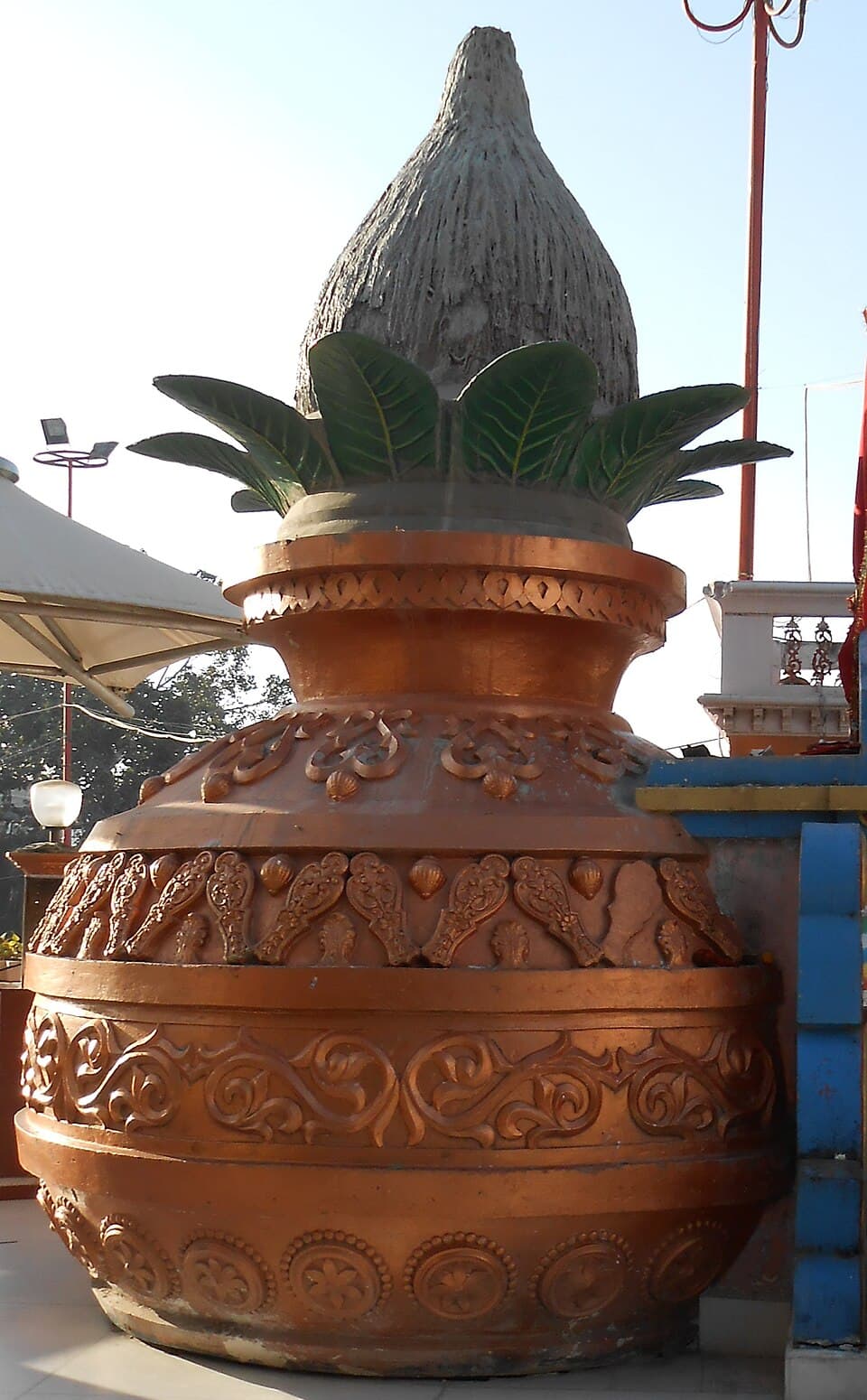
  • Kalasha (water pot), coconut and mango leaves
  • Haldi (turmeric) and kumkum
  • Akshata — unbroken rice, coloured
  • Laja — parched grain, for the laja homa
  • A flat stone for the ashmarohana
  • Garlands for the exchange
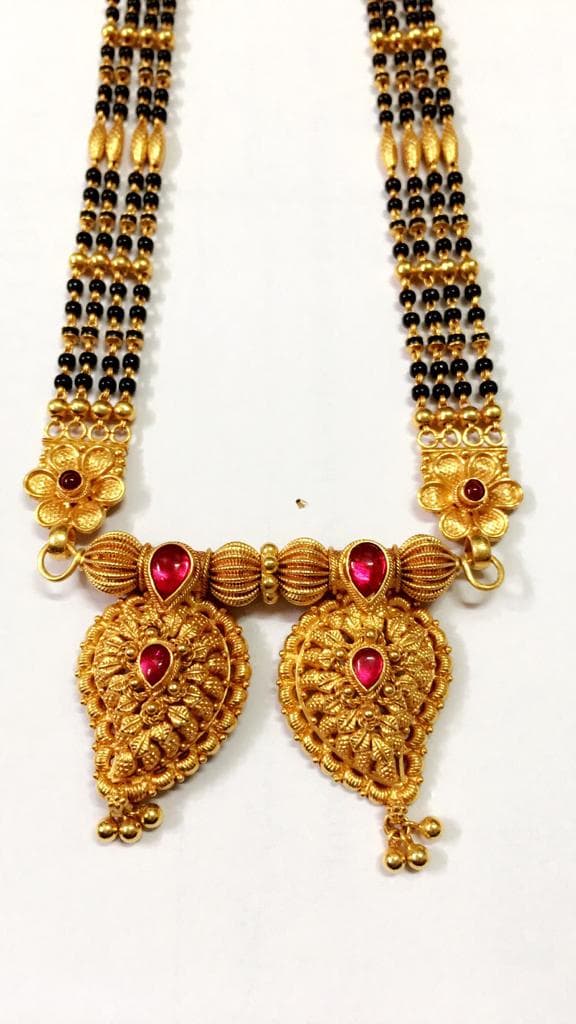
  • The marriage token: mangalsutra, thali, sindoor, chuda or the regional equivalent — this differs by community and no single item is pan-Hindu
  • New clothing for the couple, gifted by the opposite family
  • Betel leaves, areca nut, and fruit for the formal exchanges
Homa kunda, the Vedic fire vessel
Homa kunda — the fire vessel vows are made to03Ani03, CC BY-SA 4.0
Kalasha with coconut and mango leaves at a wedding
Kalasha — coconut and mango leavesKashish1711, CC BY-SA 4.0
Mangalsutra, the marriage token
Mangalsutra — the marriage tokenSankoswal, CC BY-SA 4.0
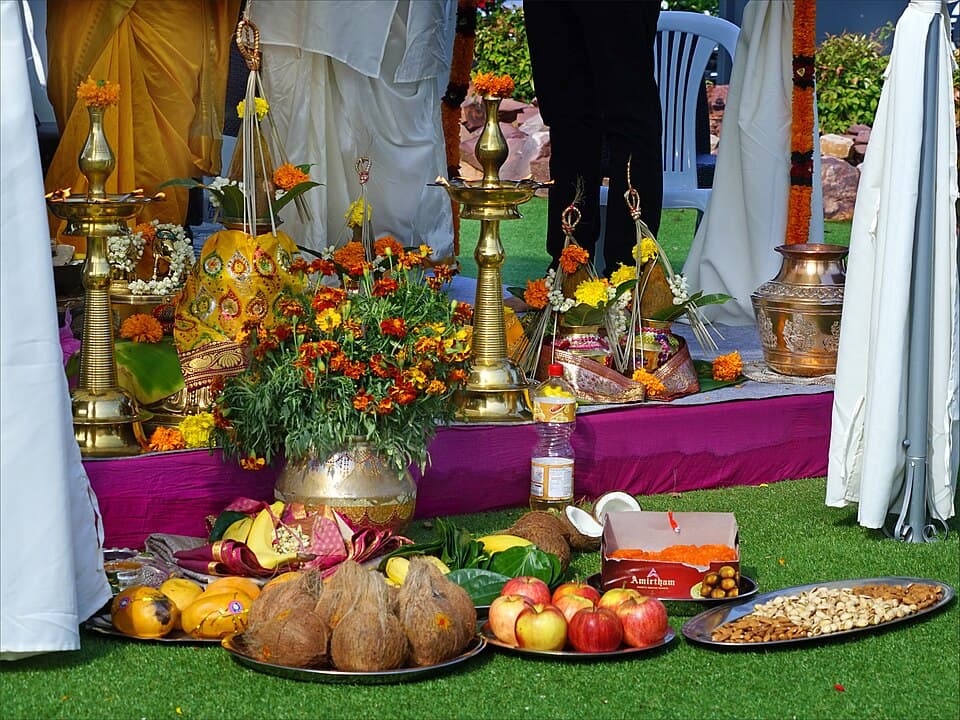
Ritual puja and sacrifice offerings laid out for a Hindu wedding
Offerings laid out for the ritesJean-Pierre Dalbéra, CC BY 2.0

Family participation

  • Officiates the rite and recites the mantrasPurohit
  • Performs the kanyadanaBride's father (optional)
  • Pours the parched grain for the laja homaBride's brother
  • Receives the groom's party at the thresholdBride's mother
  • Welcomes the bride into her new homeGroom's mother
  • Blesses the couple after the saptapadiElders of both families
  • Has a defined part in several communities' pre-wedding ritesMother's brother (optional)

Keep reading

Image: Unsplash/Pexels/Pixabay: No (recommended). Wikimedia/Google-CC: Yes (CC-BY-SA: name photographer + link).

From the Saath Wiki — aggregated across communities, with regional attribution. Suggest an edit to improve your community's practice.